
The World Health Organization estimates that many of the leading causes of death worldwide, including cardiovascular disease, diabetes, and certain cancers, can be influenced by risk factors that are detectable years before symptoms appear. This reality has fueled growing interest in preventive healthcare strategies that focus on identifying health concerns early rather than waiting for illness to develop.
Traditional healthcare systems have long been structured around treating symptoms after they emerge. While this approach remains essential for managing acute conditions and emergencies, healthcare providers, researchers, and organizations such as Good Gene have become part of a broader movement exploring how early health assessments, advanced diagnostics, and longevity-focused care may help identify risks before they become serious medical problems.
The Challenge of Symptom-Based Healthcare
Reactive healthcare has delivered significant medical advances over the past century. Modern treatments have improved survival rates for many diseases, and emergency medicine continues to save countless lives. However, symptom-based care has limitations.
Many chronic conditions develop gradually over several years. High blood pressure, insulin resistance, cardiovascular disease, and certain forms of cancer often progress silently before noticeable symptoms appear. By the time warning signs become obvious, treatment options may be more complex, costly, or less effective.
Research from the Centers for Disease Control and Prevention (CDC) shows that chronic diseases account for a substantial share of healthcare spending and are among the leading causes of disability and death. Data indicates that many of these conditions are linked to modifiable risk factors that can often be detected through routine screening and preventive interventions.
As healthcare costs continue to rise globally, experts have increasingly questioned whether a system focused primarily on treatment can adequately address long-term population health challenges.
The Growing Interest in Preventive Medicine
Preventive medicine aims to reduce the likelihood of disease before symptoms emerge. Rather than waiting for health problems to become severe, preventive approaches focus on identifying risk factors, monitoring biomarkers, and encouraging lifestyle changes that support long-term wellness.
The concept itself is not new. Vaccination programs, cancer screenings, blood pressure monitoring, and cholesterol testing have been cornerstones of preventive healthcare for decades. What has changed is the growing availability of sophisticated technologies that allow clinicians to gather more detailed health information than ever before.
Experts from the National Institutes of Health (NIH) note that advances in genomics, imaging, laboratory testing, and digital health monitoring are expanding the ability to detect disease risk earlier. These developments have helped shift public discussion from simply treating illness to understanding how health can be maintained over time.
Interest has also been influenced by aging populations, increased awareness of chronic disease prevention, and a growing focus on quality of life during later years. As a result, preventive care has become a central topic in discussions about healthcare sustainability and healthy aging.
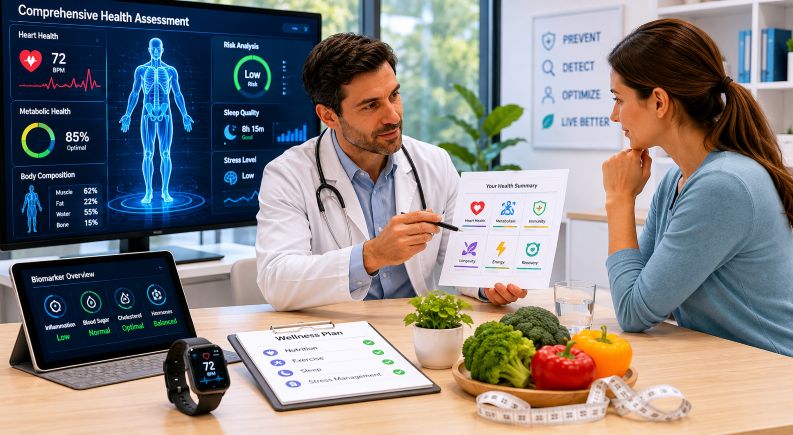
How Advanced Diagnostics Are Changing Health Assessments
One of the most significant developments in preventive medicine is the use of advanced diagnostic tools designed to provide a broader view of an individual’s health status.
Traditional annual checkups typically include basic measurements such as blood pressure, weight, and standard laboratory tests. While these remain valuable, newer assessment models often incorporate additional data points that may reveal emerging health risks earlier.
Examples include:
- Comprehensive cardiovascular risk evaluations
- Advanced metabolic testing
- Genetic and genomic assessments
- Body composition analysis
- Hormonal health evaluations
- Cancer screening technologies
- Continuous health monitoring through wearable devices
Research published by organizations such as the American Heart Association suggests that identifying risk factors early can improve opportunities for intervention and lifestyle modification. The goal is not necessarily to predict every future illness but to provide more information that may help guide healthcare decisions.
These tools have become increasingly relevant as healthcare providers seek personalized approaches rather than relying solely on population-wide recommendations.
The Rise of Longevity-Focused Healthcare Models
A related trend within preventive medicine is the emergence of longevity-focused healthcare programs. These programs typically emphasize long-term health optimization through ongoing assessment, monitoring, and individualized care planning.
Rather than concentrating exclusively on disease treatment, longevity-focused models often examine factors that influence overall healthspan, the period of life spent in good health. Areas commonly evaluated include cardiovascular function, metabolic health, cognitive performance, nutrition, sleep quality, and physical fitness.
Healthcare organizations participating in this trend often combine traditional medical expertise with emerging diagnostic technologies. The objective is to better understand an individual’s health trajectory and identify opportunities for preventive action.
Interest in longevity medicine has expanded alongside growing public awareness of aging-related health risks. Reports from the United Nations show that populations around the world are living longer, increasing demand for healthcare strategies that support healthy aging rather than simply extending lifespan.
Barriers to Wider Adoption
Despite growing enthusiasm, preventive medicine faces several challenges that may affect broader implementation.
Cost remains one of the most significant barriers. Advanced screenings and specialized diagnostic assessments can be expensive, and insurance coverage varies widely across healthcare systems. This can create disparities in access, particularly for underserved populations.
Another challenge involves interpreting large amounts of health data. While more information can provide valuable insights, experts caution that excessive testing may occasionally identify findings that are clinically uncertain or unlikely to affect long-term outcomes.
The U.S. Preventive Services Task Force emphasizes the importance of evidence-based screening practices to ensure that preventive interventions deliver meaningful benefits while minimizing unnecessary procedures.
Healthcare workforce limitations also play a role. Preventive care often requires ongoing patient engagement, lifestyle counseling, and long-term monitoring, which can place additional demands on already stretched healthcare systems.
Opportunities for the Future
Despite these challenges, the opportunities associated with preventive medicine remain substantial. Research shows that early detection and risk management can contribute to improved health outcomes for many conditions.
Digital health technologies may further expand access to preventive care. Wearable devices, remote monitoring systems, telehealth platforms, and artificial intelligence-assisted diagnostics continue to evolve, making health data more accessible to both patients and clinicians.
Healthcare policymakers are also increasingly interested in shifting resources toward prevention. Data from the Organisation for Economic Co-operation and Development (OECD) suggests that investing in preventive strategies may help reduce the long-term burden of chronic disease on healthcare systems.
As technology advances and evidence continues to accumulate, preventive healthcare may become more integrated into routine medical practice across a broader range of populations.
READ ALSO: How Modern Medical Spas Are Taking a Holistic Approach to Care
Conclusion
The growing focus on preventive medicine reflects a broader shift in how healthcare is being viewed around the world. Reactive care remains essential for treating illness and managing emergencies, but many healthcare experts believe earlier intervention offers important opportunities to improve long-term outcomes.
Through advanced diagnostics, comprehensive health assessments, and longevity-oriented healthcare models, providers are exploring ways to identify risks before symptoms appear. While challenges related to cost, accessibility, and evidence-based implementation remain, preventive medicine continues to attract attention as healthcare systems seek more effective approaches to supporting lifelong health.
The transition from treating disease to proactively managing health is unlikely to replace traditional medicine. Instead, it represents an evolving effort to complement existing care with earlier insights, informed decision-making, and a stronger emphasis on maintaining wellness over time.